How to Manage Your Online Earnings Like a Pro (Beginner Guide)

So you finally started making money online… congrats! Whether it’s from freelance writing, selling digital products, affiliate marketing, or a side hustle like YouTube or Etsy, the feeling is amazing. But then reality hits: the income is never the same every month, taxes feel confusing, and suddenly you have no idea where all the money went. Sound familiar? Dont worry, I’ve been there too.

The good news is, managing online earnings is a skill you can learn, just like building a website or editing a video. And the best part? You don’t need a finance degree. This guide will walk you through every step, from tracking every dollar to saving for taxes like a true pro. Let’s dive in…

Why this matters: Freelancers and online entrepreneurs who manage their money properly are 3x less likely to experience burn out. Plus, you’ll sleep better at night knowing exactly what’s coming in and going out.

1. The Reality of Online Income (No Sugar Coating)

Their is a big difference between a regular 9-to-5 paycheck and online earnings. One month you might earn $3,000, the next month only $1,200. That’s the nature of gigs, commissions, and project-based work. And if you’re not prepared, those low months can feel scary… But once you accept this fluctuation, you can plan for it. The key is to stop treating your online income like “extra cash” and start treating it like a real business. Because it is a business, even if you’re the only employee.

I’ve seen beginners blow their first $2,000 on new gear and takeout, then panic when a client pays late. Dont be that person. Instead, use the strategies below to build stability.

2. Seperate Your Money – Business vs Personal (Crucial Step)

One of the biggest mistakes? Mixing your online earnings with your personal checking account. When everything is together, you can’t tell what’s profit, what’s for taxes, or what you can actually spend on groceries. So open a seperate bank account just for your online income. It can be a free online account (many banks offer no-fee options like Ally, Chime, or local credit unions). Also, get a seperate PayPal or Stripe account using your business email.

This simple move changes everything: you see your real business cash flow, you avoid accidentally spending tax money, and come tax season, you won’t be digging through 500 personal transactions. Trust me, future you will be grateful.

💡 Pro tip: Some online earners open three accounts: one for income, one for taxes (savings), and one for operating expenses. Overkill? Maybe for beginners, but it works wonders once you earn over $2k/month.

3. Track Every Dollar Coming In (Yes, Every Single One)

You can’t manage what you don’t measure. Start tracking every payment you recieve, no matter how small. That $5 from an affiliate sale, that $150 from a ghostwriting project, even the $0.50 from ad revenue… all of it. Why? Because small streams add up, and tracking helps you see which activities actually pay off.

Here’s a simple way to do it without fancy software: use a Google Sheet or Excel. Create columns for: Date, Source (client/platform), Amount, Fee (PayPal or Stripe fee), Net Amount, and Category (e.g., freelance, digital product, ad income). Update it every week. If spreadsheets feel boring, try free apps like Wave (accounting) or Stride (for freelancers).

Example of a basic tracking table:

DateSourceAmountFeeNetCategory
Mar 3, 2026Client A (article)$250$7.50$242.50Writing
Mar 5, 2026Amazon Affiliate$42.30$0$42.30Affiliate
Mar 10, 2026Etsy digital print$18.00$0.85$17.15Passive

At the end of each month, sum up the net amounts. You’ll quickly see trends: maybe freelance pays most but takes time, while digital products need less work. This clarity is pure gold.

4. The Tax Trap – Set Aside Money Before You Spend It

If you’re used to being an employee where taxes are automatically deducted, online earning will be a rude awakening. You are responsible for setting aside money for income tax and self-employment tax (in the US that’s around 15.3% just for Social Security and Medicare). The general rule: put away 25% to 30% of every payment into a seperate savings account. I know, it hurts… but not as much as getting a huge tax bill with no savings.

Create a “Tax Savings” sub-account or a high-yield savings account. Every time you recieve a payment, instantly transfer the percentage. Do this first, before you spend anything. Many freelancers use apps like Keeper or QuickBooks Self-Employed to estimate quarterly taxes. And yes, you might need to pay estimated taxes every quarter if you earn a lot – check your local laws. But even for small amounts, just save consistently.

Don’t ignore this: I’ve seen talented creators quit freelancing because they didn’t save for taxes and ended up owing thousands. Set up an automatic transfer every week – your future self will thank you.

5. Build a Budget That Works With Irregular Income

Normal budgets assume a fixed salary. For online earners, you need a “lowest month” budget. Calculate your average monthly essential expenses (rent, utilities, groceries, internet, insurance). Then look back at your last 6 months of income: what’s the smallest amount you earned in a single month? That’s your baseline. Aim to keep your essential spending below that baseline.

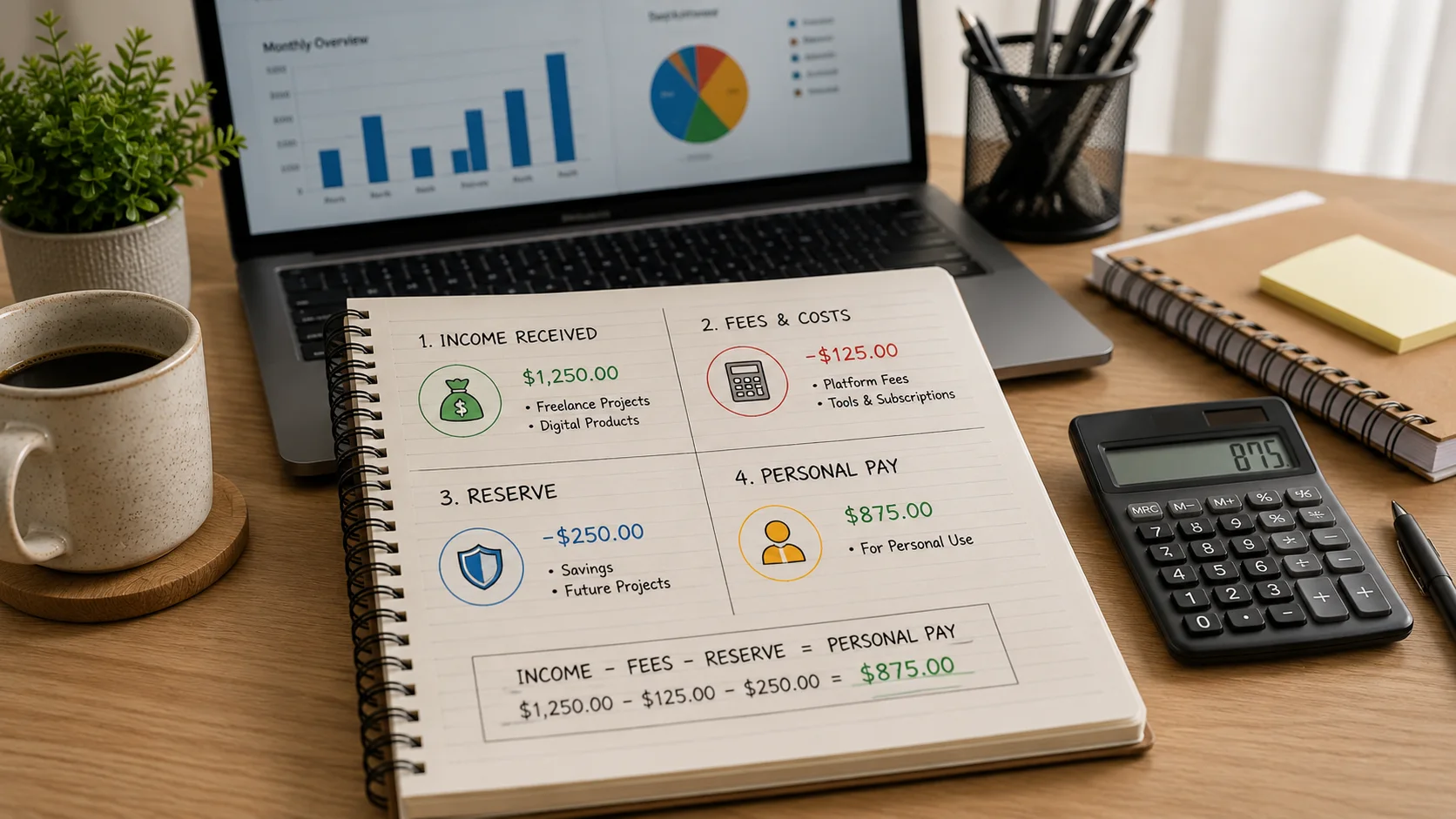
When you have a high-earning month (say $4,000), don’t inflate your lifestyle. Instead, put the surplus into an “income buffer” account. Then in lean months, you pay yourself from that buffer. This smooths out the rollercoaster. Many pros follow the 50/30/20 rule but adapted: 50% for essentials, 20% for taxes, 20% for savings/debt, and 10% for guilt-free fun. But feel free to adjust based on your reality.

Another tactic: pay yourself a “salary” from your business account. For example, decide that your monthly personal salary is $2,500. Anything extra stays in the business account for future investments, slow months, or taxes. This psychological trick works wonders.

6. Slash Unnecessary Fees and Costs

Online platforms love taking tiny cuts… and those cuts add up. PayPal fees, Stripe fees, transferwise currency conversion, platform subscription fees (think Canva, Adobe, hosting). Every dollar you save on fees is a dollar that stays in your pocket. Here’s what you can do:

  • For large payments over $500, request bank transfer (ACH or Wise) instead of PayPal – fees are often lower.
  • If you work internationally, use Wise or Payoneer for better exchange rates.
  • Review your monthly subscriptions: do you really need three project management tools? Cancel what you don’t use.
  • When selling digital products, consider platforms with lower transaction fees (Gumroad takes 10% + fees, but you can use Lemon Squeezy for 5% + fees).

Also, track your business expenses – they reduce your taxable income. Things like internet bills, software subscriptions, home office equipment, even a portion of your phone bill. Keep reciepts! I use a simple folder in Google Drive for photos of reciepts.

7. Create an Emergency Fund & Start Saving

Since online income can be volatile, an emergency fund isn’t optional, its essential. Aim to save 3 to 6 months of your essential living expenses. Keep this money in a separate, easy-access savings account (not invested in stocks). Start small: save $500 first, then $1,000, then keep going until you reach your target.

Once you have your emergency fund, think about long-term goals. If you’re self-employed full time, you don’t have an employer 401k. Look into a Roth IRA or a SEP IRA for retirement. Even putting $100 a month into an index fund can grow massively over time. And for big dreams like buying gear, taking a course, or traveling, create a separate “sinking fund” and automate small weekly transfers.

Real example: Sarah, a freelance designer, started setting aside 15% of every payment into a high-yield savings account. After 8 months, she had over $3,200 saved. When two clients delayed payment in the same month, she didn’t stress – she just used her buffer. That’s pro-level management.

8. Reinvest in Yourself (But Wisely)

It’s tempting to spend all your online earnings on shiny new things… but smart reinvestment grows your income. Set aside a percentage (say 10-15% of profit) for “business growth”. That could mean:

  • Buying a better microphone or camera if you’re a content creator.
  • Paying for a course that teaches high-income skills (SEO, copywriting, Facebook ads).
  • Hiring a virtual assistant to offload repetitive tasks.
  • Upgrading your website hosting or email marketing tool.

The key is to track the return on that investment. Did the $300 course help you land a $1,500 client? Then it was worth it. Dont just buy tools because they look cool – buy them because they save time or directly increase revenue. And remember, learning new skills is often the highest ROI thing you can do.

9. Use Tools to Automate the Boring Stuff

Let’s be honest… nobody likes manual tracking and sending invoices. But automation changes the game. Here are some beginner-friendly tools:

  • Wave – free invoicing, accounting, and receipt scanning. Perfect for small earners.
  • QuickBooks Self-Employed – tracks mileage, separates business expenses, estimates quarterly taxes.
  • Zapier – connects apps so new PayPal payments automatically go into a spreadsheet.
  • Parallax or Ramp – for business credit cards that automate expense tracking.

Even setting up a recurring calendar reminder to review your finances every Sunday takes 10 minutes but prevents disasters. Automation is your best friend…

10. Common Mistakes Beginners Make (And How to Avoid Them)

Let’s go through the classic traps so you can skip them entirely:

  • Not separating money: “I’ll just remember how much I earned” – no, you won’t. Open that seperate account today.
  • Spending before saving for taxes: That new MacBook feels great until April 15th. Always set aside tax money first.
  • Chasing every low-paying gig: Track your hourly rate. If a task pays $10 for two hours, it’s not worth it. Focus on high-value activities.
  • Ignoring small expenses: A $5 monthly fee here, a $12 subscription there… adds up to hundreds per year. Audit every 3 months.
  • No retirement plan: Online earnings can vanish if you get sick or tired. Even $50/month into a Roth IRA is a win.

And a personal note: don’t compare yourself to influencers who flash luxury items. Many of them are in debt or don’t save. Real pros live below their means and invest the rest.

11. A Simple Monthly Checklist For Online Earners

To keep things consistent, follow this checklist at the end of every month. Print it or save it somewhere visible:

  • ✅ Log all income from the month in your tracking sheet (include every platform).
  • ✅ Record all business expenses (software, fees, supplies, education).
  • ✅ Calculate total net earnings and move 25-30% to your tax savings account.
  • ✅ Review your “buffer account” – is it above 3 months of expenses? If not, transfer extra.
  • ✅ Pay any quarterly estimated taxes if applicable (mark deadlines on calendar).
  • ✅ Scan for unused subscriptions – cancel at least one if possible.
  • ✅ Set a small financial goal for next month (e.g., “increase average transaction by 10%”).

That’s it. 15-20 minutes of work can save you from months of stress.


Final Thoughts – You Got This!

Managing online earnings doesn’t have to be complicated or scary. Start with the basics: separate accounts, track income, save for taxes, build an emergency buffer. Take it one step at a time. You’ll make mistakes – I once forgot to save for taxes for six months and had to work double shifts to catch up. But those mistakes teach you. The fact that you’re reading this guide already puts you ahead of most beginners.

Remember, every professional was once an amateur who just refused to give up. Implement just three tips from this article this week, and you’ll see a difference within a month. You have the power to turn your online hustle into a stable, thriving income source. Now go out there and manage those earnings like the pro you’re becoming…

Your next step: Pick ONE action from above (open a separate bank account, download a tracking spreadsheet, or set a 25% tax rule). Do it within the next 24 hours. Small steps, big results.

Disclaimer: This content is for educational purposes only and does not constitute financial or tax advice. Always consult a qualified accountant or tax professional regarding your specific situation.

Scroll to Top