
How I Would Make My First $10 Online Again With Zero Investment
The first $10 online sounds like a tiny target, but it matters. It proves that somebody is willing to pay for something you did through the internet. After that, the question changes from “Is online income real?” to “How do I repeat this without wasting time?”
I am not going to pretend there is one perfect website where every beginner can log in and collect $10. Country restrictions, payment methods, demand, and available skills all matter. What I can do is show the route I would follow today without paying for a course, buying stock, or running advertisements.
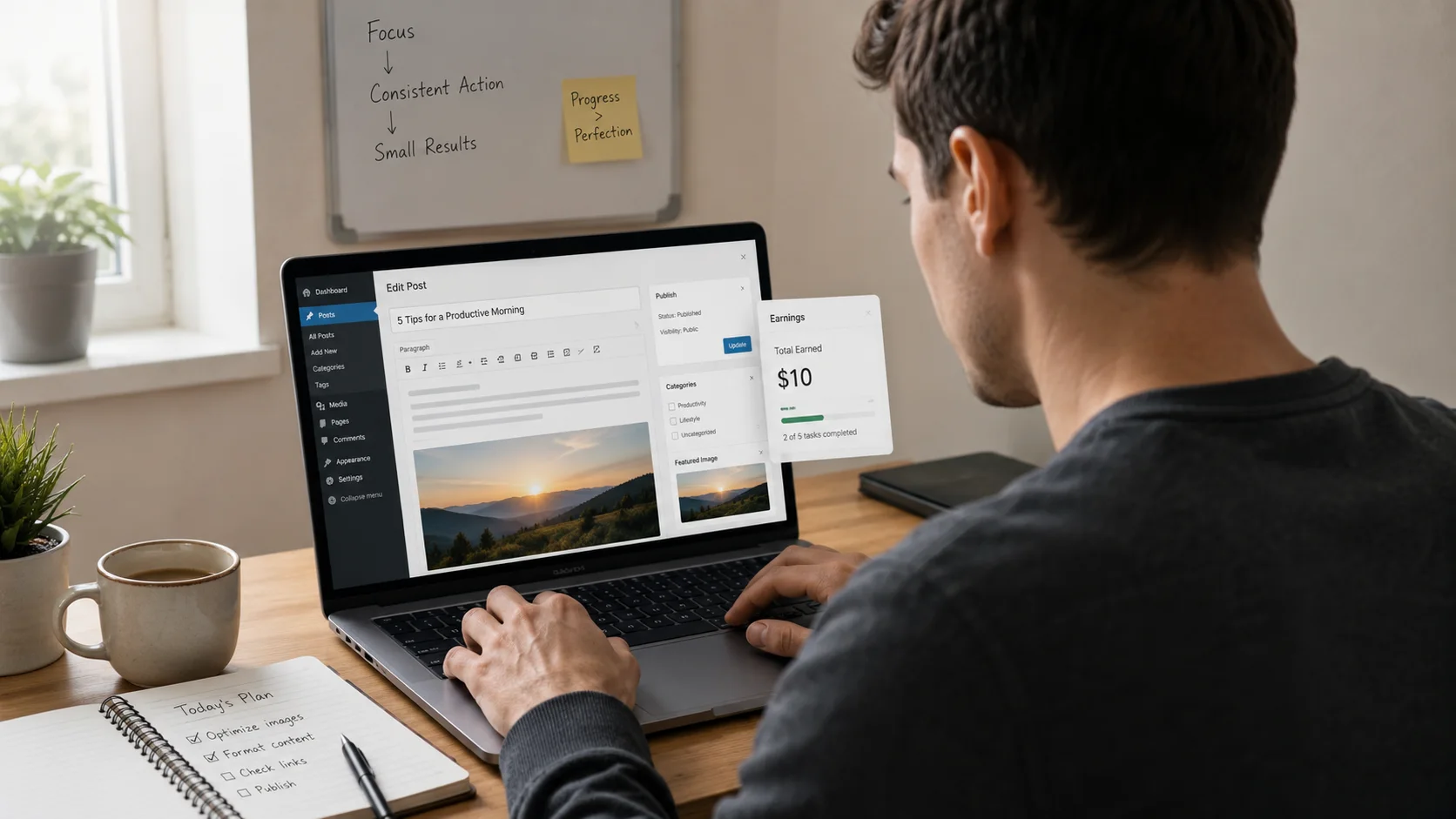
Step 1: Pick a Service That Takes Less Than Two Hours
A beginner offer should be small, clear, and easy to check. I would avoid starting with “I will build your full business website” or “I will manage all your social media.” Those jobs have too many moving parts.
Better first-service ideas include:
- Resize and compress 20 images for a website.
- Format one WordPress article and add headings, links, and image alt text.
- Create three simple social media posts in Canva.
- Clean a spreadsheet and remove duplicate rows.
- Write five short product descriptions from information supplied by the client.
- Test a website on mobile and provide a clear list of problems.
The best choice is not the most impressive one. It is the one you can finish properly.
Step 2: Make Two Samples Before Asking for Work
Clients are taking a risk when they hire somebody with no reviews. A sample lowers that risk. If you choose image compression, prepare before-and-after examples showing the file size and visible quality. If you choose WordPress formatting, create a demo article with clean headings, a table, and responsive images.
Step 3: Turn the Skill Into One Sentence
Your offer should tell the buyer what will happen. For example:
That is easier to understand than “I provide professional image optimisation solutions.” Clear wording feels more trustworthy because the buyer can see the limit, result, and delivery time.
Step 4: Look for the First Buyer in More Than One Place
I would create one focused listing on a freelance marketplace, but I would not wait there doing nothing. I would also look at local business pages, creator communities, website-owner groups, and people I already know.
Direct outreach should be personal. Do not send the same paragraph to 100 people. Find one visible problem and mention it politely. For example, you could tell a small website owner that several product images are very large and offer to optimise a few as a sample.
Step 5: Price the First Job Fairly
To reach the first $10, I would aim for one $10 job or two $5 jobs. I would not offer unlimited work for $5. A low starting price is only reasonable when the scope is also small.
Include the number of items, delivery time, file format, and revision limit. If the buyer adds more work, explain that it needs a new price before continuing. Learning to control the scope is part of earning online.
Step 6: Deliver in a Way That Feels Organised
A good delivery is more than attaching files. I would include a short message explaining what was completed, how the files are organised, and anything the buyer should know.
For example:
This shows care and makes the result easier to review.
Step 7: Ask for Feedback, Not a Forced Review
After the buyer confirms the work is correct, ask whether anything could be improved. On marketplaces, you can politely mention that an honest review helps, but never demand a positive rating or offer something in exchange for it.
My Backup Plan: Microtasks
If I could not find a buyer quickly, I might use legitimate microtask or user-testing platforms to build part of the first $10. Before joining, I would check country eligibility, payment methods, minimum withdrawal, account rules, and independent user reports.
I would not depend on surveys alone. They can disqualify users after several questions, and availability changes by country. Microtasks are better used as a temporary bridge while improving a sellable service.
A Realistic Seven-Day Schedule
- Day 1: Choose one small service and study five good examples.
- Day 2: Create the first practice sample.
- Day 3: Create the second sample and write your offer.
- Day 4: Publish one listing and contact three relevant people.
- Day 5: Improve the listing based on questions or no response.
- Day 6: Contact three more relevant prospects and apply to suitable jobs.
- Day 7: Review the results and keep the part that received attention.
What I Would Not Do
- Pay a stranger for a “guaranteed” earning account.
- Use fake reviews or copied portfolio samples.
- Accept work I do not understand.
- Work without confirming the scope and payment method.
- Send identity documents outside a platform’s official verification page.
- Buy expensive tools before earning anything.
What the First $10 Should Teach You
The first $10 is not proof that you can quit a job or build a full income immediately. It should teach you which offer attracted attention, what buyers asked, how long delivery took, which fees were removed, and whether you would do the same work again.
Disclaimer: Earnings are not guaranteed. Platform availability, fees, age requirements, and payment options vary by country. Always follow platform rules and protect your personal information.